
Product marketing for startups ready to scale beyond founder-led growth.
We help B2B technology companies build the positioning, messaging and go-to-market foundations needed to align product, marketing and sales.
Through focused product marketing sprints, we turn scattered knowledge into a clear playbook your team can use to grow. 35+ product marketing sprints completed across over a dozen industries.








Built for B2B tech companies at an inflection point
Founder-led teams becoming team-led
You have proven demand. Now you need a repeatable way for your team to communicate your value. Typical stage: 20+ employees
Common challenges:
Founder still owns the story
Sales needs repeatable messaging
Team growth is creating inconsistency
Revenue teams needing alignment
Your product, marketing, sales and customer teams are moving fast, but everyone is telling a different version of the story.
Common challenges:
Messaging lacks consistency
Sales conversations vary by person
Marketing assets are not converting
Product teams launching or expanding
You are entering a new market, launching a new product, or repositioning an existing one.
Common challenges:
Unclear differentiation
Features before customer value
No launch narrative

Your company has grown. Your story hasn’t.
In the early days, product marketing happens naturally. Founders know the customer, the problem, and how to explain why the product matters. But as the company grows, that knowledge becomes harder to scale.
More customers. More products. More people involved. The story starts to fragment. Sales teams create their own messaging, marketing struggles to explain what makes you different, and product ships without a clear customer narrative. Founders become the only people who can tell the story, and that doesn't scale.
The problem isn't a lack of ideas. It's that your product marketing knowledge is scattered across your business. We bring it together into a clear foundation your whole team can build from.
Two sprints. One product marketing system. Built to keep running.
Every AltMonday engagement follows the same sequence — not because every company is the same, but because effective product marketing always needs a solid foundation before it can scale. We build that foundation first. Then we activate it across your go-to-market teams.
-
Before you can scale your story, you need a clear understanding of who you serve, the problem you solve, and why customers choose you.
We extract the knowledge already inside your business and turn it into a shared product marketing foundation.
Includes:
ICP profiles
Customer insights
Competitive positioning
Messaging framework
Core narratives
Everything is documented, structured and ready for your team to use.
Outcome: clarity on who you serve, why you win, and how to talk about it.
-
Three weeks to build. Three months minimum to run.
With the foundation in place, we turn your product marketing knowledge into practical go-to-market assets and ongoing intelligence.
We use the fact base from Sprint 1 to create the tools your teams need to communicate consistently, sell confidently and stay aligned as your market evolves.
You leave with:
Sales and website messaging
Go-to-market assets
Content direction
Competitive intelligence workflows
Market trends reporting
Win and loss insights
Everything is built from your product marketing foundation, so your team can move faster without starting from scratch.
Outcome: a repeatable GTM system that keeps your messaging clear, current and connected to the market.
-
Built to run independently. Supported when you need us.
The goal is not to create another dependency.
The goal is to give your team the clarity, tools and foundation to operate with product marketing discipline.
But companies keep evolving.
New products launch. Markets shift. Teams grow.
When you need an experienced product marketing partner to help navigate the next challenge, AltMonday is here to support.
Whether it is refining your positioning, preparing for a launch, entering a new market or solving a new go-to-market challenge, we can step back in when the moment calls for it.
Priced for where you are.
Fixed pricing based on where your business is at, not how big your budget is. Three weeks per sprint. No guesswork.

Your early customers are already telling you why they buy, but the story still lives in the founder's head, and every pitch sounds a little different. You're done winging it.
One product, one core segment
LLM-ready product marketing fact base (market, customers, product)
First positioning thesis and messaging framework
Production-ready copy for your core pages
Sprint readout with recommendations

You've got more than one product, more than one segment, or both starting to pull your story in different directions. Time to get specific about what you're actually selling, and to whom.
Up to two products, or up to two segments (add-ons available)
Everything in Build
Segment or product prioritisation and sequencing
Competitive landscape scoped to where you actually compete

You’re at a turning point - a new market, a new product, a leadership change. What got you here doesn't fit where you're going, and the fix isn't a few new lines on the homepage.
Up to two products and up to two segments, single market
Everything in Scale
Full repositioning across the business, not a single narrative thread
GTM sequencing and prioritisation across the full scope
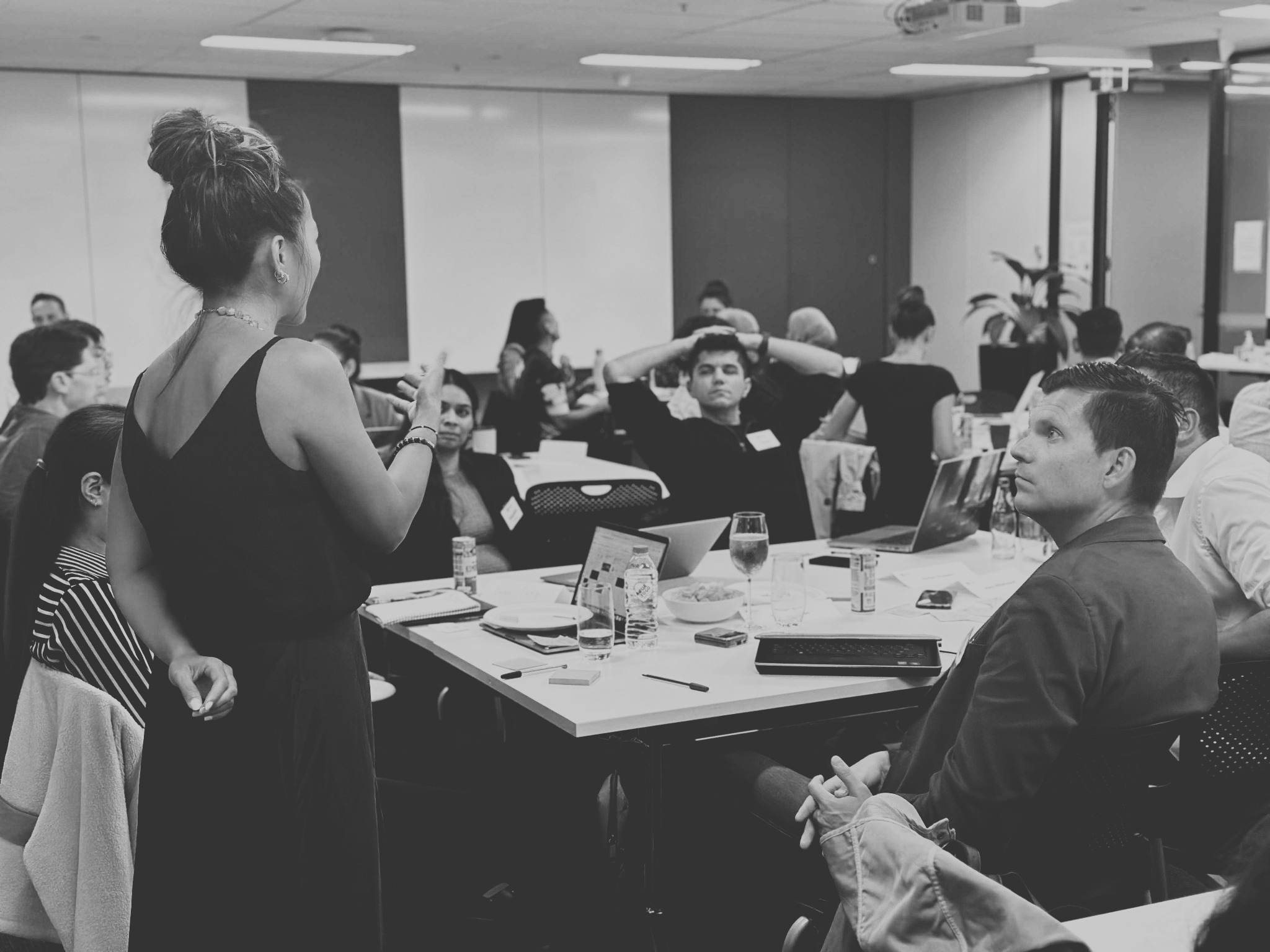
Built by someone who sat on your side of the table
Angela Catalan spent close to two decades in client-side product marketing, including as Director of Global Product Marketing at Nearmap, before founding AltMonday. She's built product marketing functions from the ground up, run 35 sprints across over a dozen industries, and developed a methodology that turns what most businesses treat as a gut-feel exercise into something repeatable, documented, and built to last.
Ready when you are.
No pitch. No preparation needed. Just tell us what's not working and we'll figure out together whether we're the right fit.
Frequently Asked Questions
-
If your product is in the market and you're in at least one active sales conversation, you're not too early. Sprint One is designed for companies at exactly that stage - where the story exists in the founder's head but hasn't been extracted, documented, or handed to anyone else yet. The earlier you build the system, the less archaeology you'll need to deal with later.
If you're pre-revenue and still finding product-market fit, we're probably not the right fit yet. That work is best done in-house. We've got a guide to help you through the positioning work. Just drop us an email - we’re happy to share a copy. -
No. If you have existing materials - a pitch deck, a website, a positioning document, old customer research - we audit them before the discovery session. Most of the time, there's more to work from than clients expect. We'll tell you what's solid, what's missing, and what needs reworking. Sprint One starts from what exists, not from a blank page.
-
Yes. Sprint Two produces execution assets and configures the automated workflows that keep the system current. Without the fact base from Sprint One, those assets have nothing true to build from. We've seen what happens when companies skip the first principles and go straight to execution. The output is generic, the product positioning is vague, and the content sounds like everyone else.
Sprint One is what makes Sprint Two worth doing. -
No. Sprint One is a complete engagement in its own right. You'll walk away with a fully documented fact base, a structured product marketing workspace, and everything your team needs to start doing good product marketing. Some clients stop there and run the process themselves. Others continue into Sprint Two to build the execution layer and activate the automated workflows. Either way, Sprint One stands alone. No need to commit to the second sprint.
-
No. Most of our clients are outside Sydney. The discovery session runs remotely, and we work across time zones. In-person is available for Sydney-based teams if preferred. We're also happy to travel to be closer to your team, as that's where great insights come from. Travel arrangements are billed separately.
-
Three weeks is long enough to do work that matters and short enough to derisk the decision. The structure came directly from a client who asked us to compress a ten-week engagement into three because he needed to preserve runway while raising his next round. And it worked. We've run the same model thirty-five times since. Three weeks isn't about speed for its own sake. It's about focus. One client. One problem.
-
We work with a small number of clients at any one time. The sprint model is designed around focused delivery with structured checkpoints - not daily hours logged. You're not buying time (we think that's a rip-off). You're buying the output of a three-week sprint with clear deliverables at each checkpoint. Angela oversees every engagement directly.
-
Angela leads every engagement from discovery through to delivery and handover. For specific executional needs - design, technical writing, specialised research - she draws on a trusted network of specialists brought in as needed. You'll always know who is working on what. Angela is the strategic lead and the person accountable for the output. -
Most teams consider three options before they find us.
Hiring an in-house PMM is the right move eventually — but it takes three to six months to recruit, onboard, and ramp someone before they ship anything meaningful. If you're trying to fix positioning or launch something now, that timeline hurts. We get you to a working system first, so your future hire inherits a foundation instead of starting from scratch.
Hiring a strategy consultant gives you a polished deck and a clear point of view. What it rarely gives you is the execution layer — the messaging docs, the workflows, the templates your team actually runs from. We build the strategy and the system together, so it doesn't sit in a slide and gather dust.
Doing it internally works when you have the bandwidth and the distance to see your own product clearly. Most founders and product teams don't — not because they lack the skill, but because they're too close to it. We bring outside eyes and a proven process, then hand everything back so you own it completely.
The other difference is permanence. When an engagement ends, the work stays. -
Strategy feels abstract. We get it.
Here's what exists at the end of each sprint, not as slides but as working documents your team uses.
Sprint One produces a completed fact base, ICP profiles built on real behavioural patterns, a positioning thesis, a messaging map, a competitive analysis, and product architecture documentation. Everything is structured and documented in a way that feeds directly into AI-native workflows.
If you want to see the methodology behind it before committing, the Accidental Product Marketing guide walks through the full process. [Download it here.]
Sprint Two takes that fact base and builds the execution layer — landing page, product one-pager, blog articles, product release checklist. We build each asset around your internal process and refine the full set over three months, with automated workflows running continuously and a quarterly review process so the system stays current.
You'll also leave with an end-to-end documentation of your product marketing process, tailored to your organisation — a clear blueprint of what your team owns, what AI assists with, and what AI handles independently. No black box. Just a system your team can run without us. -
Sprint Two runs for 3 weeks, with 3 months’ support. After that, most clients either continue the GTM engine by bringing it in-house or move to Strategic Advisory - where Angela provides ongoing strategic judgment on what the system is surfacing without the full execution layer underneath it.
The goal is always to get to a point where your team runs the system without us. We'll tell you when you're there. -
By default, we work across Claude, Notion, Slack, Google Workspace, Webflow, HubSpot, Confluence, and Jira - the tools most B2B teams are already running.
We build the workflows, prompt library, skills, and documentation layer that makes AI actually useful for product marketing inside those tools.
If your stack looks different, we adapt. What we bring is the methodology, not a rigid toolset. The thinking transfers regardless of the platform.